
A long blackout is not one problem lasting longer. It is a chain of services failing at different speeds: refrigerated food warms, pumps stop, payment terminals become unreliable, and people who manage well on the first evening can become exhausted by the second week. Preparing for ninety days means examining those dependencies before they collide. It does not mean committing your family to stay in an unsafe home for three months.
Treat ninety days as a planning stress test, not an official prediction or a universal stockpiling standard. Your strongest plan may combine several days of stored supplies, dependable replenishment, community assistance and an early move to a safer location. The test is whether a necessary function remains available, not whether an impressive pile of equipment sits in a closet.
Begin with the conditions that make home unsafe
Write down the circumstances that would end a stay-at-home plan. An evacuation order is one. Other examples include unsafe indoor temperatures, a medical device losing its dependable power supply, lack of safe drinking water, sewage backing up or a damaged structure. Do not wait until every item is gone before considering departure. A person with a limited mobility window may need to leave while roads, elevators and assistance are still available.
Choose two possible destinations and learn what each can actually provide. A relative outside the affected area may offer water but not accessible sleeping space. A shelter may have admission arrangements for pets or equipment that need checking. A location on the same failing utility system is not automatically an independent fallback. Keep a paper route and confirm transport arrangements rather than assuming an app will solve the problem later.
Map functions before buying equipment
Walk through a normal day and list the services behind it. Drinking water may depend on a municipal pump or your well. Cooking may need electricity even when the stove burns gas. Heating controls, refrigerator compressors, garage doors, internet equipment and sewage pumps each have different dependencies. A gasoline generator cannot solve all these problems merely by existing.
Use a simple planning table with five columns: function, ordinary dependency, temporary alternative, renewal requirement and failure trigger. For lighting, that might mean mains electricity, LED lantern, charged batteries and a safe route through the house. For a medication, the answer must come from its storage instructions and a pharmacist or clinician, not from an improvised cooler assumption. Classify every unverified answer as a task to resolve.
Build three layers instead of one enormous shopping list
The first layer supports a short disruption: drinking water, familiar shelf-stable meals, accessible lights, essential medicines, paper contacts and a departure bag. The second layer deals with a longer loss of services: water replacement, sanitation arrangements, charging opportunities, transport and financial access. The third is a continuing decision process: monitor conditions, record consumption, check people and reassess whether remaining home is still sensible.
Build the layers in order. Buying a large battery before identifying a critical device's power requirements can leave a household with expensive equipment and no dependable medical plan. Buying food before checking whether it needs water, fuel and refrigeration can create a similar mismatch. Prioritize the weakest essential function rather than the most interesting product.
Give water and food a renewal plan
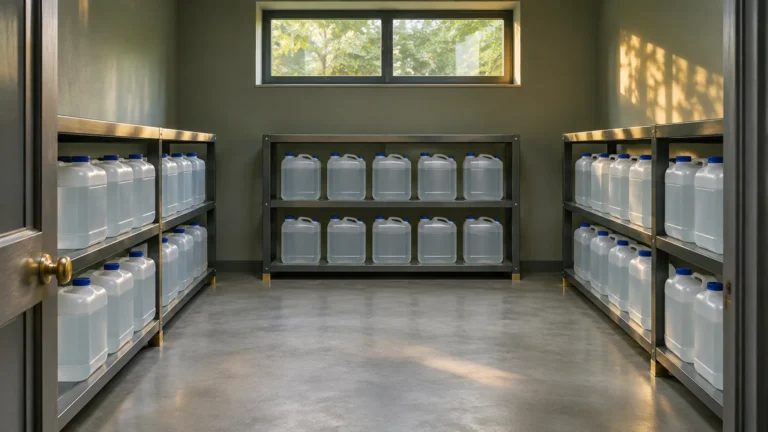
Calculate quantities for the people actually present, including visitors or caregivers you expect to accommodate. Keep drinking-water requirements separate from sanitation and other uses so the same gallon is not allocated twice. The detailed water guide in this series explains the arithmetic and why a ninety-day total can exceed sensible household storage capacity.
For food, plan meals that people will eat and can prepare with the available water and equipment. Record what happens after a package is opened. Large containers may be economical before an outage but awkward without refrigeration afterward. Choose a mix of ready-to-eat items and foods with realistic preparation needs; do not depend entirely on long-simmering dried staples.
Identify how supplies might be renewed safely. A distribution point is useful only if you can receive accurate opening information, reach it and carry supplies home. A trusted friend may help, but their own household could be affected. Maintain more than one possibility and avoid treating an unconfirmed delivery service as guaranteed infrastructure.
Size energy around necessary tasks
A power plan starts with devices, watts and hours, not with the largest advertised number on a battery. List essential loads and exclude anything you have not measured or verified. A small lamp used briefly is different from a refrigerator cycling through the day. A heating appliance can overwhelm a system sized for phone charging.
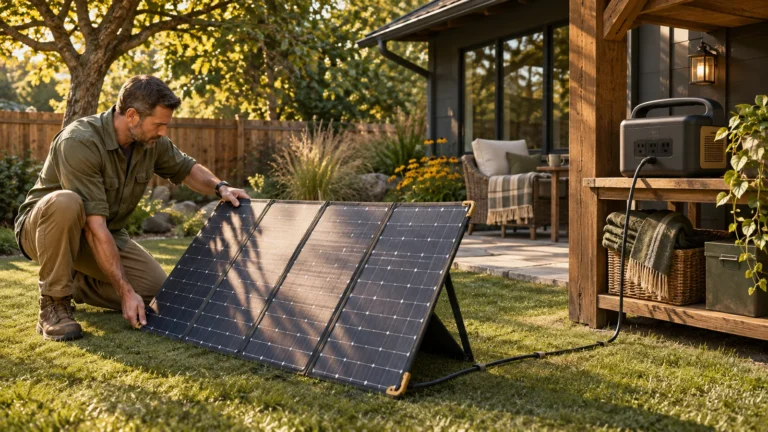
Recharge is a separate calculation. A battery that lasts two days is not a ninety-day source unless there is a practical, compatible way to replenish it. Solar production varies with weather, season, shade and equipment limits. Fuel-burning generators require safe outdoor placement and a lawful fuel plan. If those conditions cannot be met at your property, do not improvise an indoor installation.
Plan the work and the people
Someone must collect information, prepare meals, clean, manage waste, check supplies and support anyone needing help. Those tasks continue when the novelty disappears. Assign a primary and backup person for each function, then check whether the assignments are realistic if one adult is working elsewhere or becomes ill.
Include children, older relatives and disabled household members in a respectful planning conversation. Ask what support is useful rather than assigning capabilities by age or diagnosis. Keep medical details private. Build breaks and ordinary routines into the plan: exhaustion can make a safe system unreliable even while supplies remain.
A household example: replace a fragile assumption
Consider two adults and one child in an apartment. They initially plan to buy a fuel-burning generator. On inspection, they have no permitted outdoor location that meets safety requirements and no practical place to keep fuel. The better next steps are modest water storage, no-cook meals, small rechargeable lights, a verified charging location and an earlier relocation threshold during extreme temperatures.
Their example is hypothetical, but the lesson is concrete: a plan improves when an unsuitable assumption is removed. It does not improve simply because the equipment list grows. Write down what you decided against and why; that record prevents the same unsafe idea from returning under stress.
Make a one-page operating plan
Put the essentials on a page someone else can understand: who is included, where water is located, which meals are available without cooking, who needs priority assistance, where information comes from, when check-ins occur and when to leave. Keep supporting inventories separately. A twenty-page binder is less useful if the first person opening it cannot find the next action.
Review the page against three situations: everyone is home, one caregiver is absent and the normal communications channel fails. Each situation should still produce a workable next step. If it does not, repair that dependency before expanding the stockpile.
Turn the plan into a dependency map
Draw six boxes on a sheet: people, water, food, shelter, care and communication. Under each, write the service that makes it work today. Water may depend on a municipal pump; care may depend on a pharmacy delivery; communication may depend on a router and a charged phone. Add transportation as a connection between the boxes rather than treating it as an optional final purchase.
Next, write an alternative beside each dependency. Be specific enough that another adult could act: a confirmed accessible destination, an independently verified provider number or a supported charging method. “Find more water” is a problem statement, not an alternative. “Call the utility information line, confirm the current distribution arrangement and use the agreed safe transport” describes a process that can be checked.
Mark the dependencies whose failure requires earlier relocation. This prevents a large food inventory from dominating the household's judgment when medical care or sanitation fails first. Keep personal medical details on a private attachment rather than a wall chart visible to visitors.
Compare two plans before spending
Consider a hypothetical household choosing between another large battery and an accessible transport arrangement. Its existing battery already covers limited communication, but one resident cannot travel in the available vehicle. The transport gap may deserve priority even though it is less visible than equipment.
Compare the options by the essential function they support, the evidence that they work and the unresolved dependency they leave. Include maintenance, storage and the people needed to operate them. Do not score an item highly simply because it can serve many advertised uses; ask which of those uses the household actually needs.
Write one action for this week, one question for a responsible provider and one date for review. A complete plan does not need to be written in one sitting. Small verified actions are more useful than a long shopping list built around untested assumptions. Keep the ninety-day horizon as a way to expose dependencies, while maintaining permission to change course at any time.
Put the plan into practice
– Choose one essential function and test its alternative without interrupting medical care, refrigeration or safety systems. – Record the actual equipment, instructions and time involved. – Identify a backup person who can explain the same process. – Write a departure trigger and the first transport action. – Set a review date tied to changing household needs, not just an annual shopping trip.
The goal is a household that can make better decisions as conditions change. Stored supplies buy options; verified relationships, realistic calculations and early evacuation choices keep those options useful.
Sources and safety references
Reviewed November 2026. Planning examples use stated assumptions; they are not product tests or survival guarantees. Follow current local instructions and qualified guidance for individual medical, building and utility decisions.