An emergency checklist should tell you what a household can do, not merely what it owns. For an extended outage, the important question is whether drinking, eating, staying clean, obtaining information and leaving safely remain possible as ordinary services fail. A checklist becomes complete for your household only when its assumptions have been tested.
The ninety-day horizon in this guide is a planning exercise. It is not a demand to buy ninety days of every consumable at once or remain home despite dangerous conditions. Build a manageable reserve, identify replenishment and preserve a departure option. A checked box beside an unsafe heater or an inaccessible water container is not preparedness.
Use four kinds of checklist entry
For each function, record an item, a quantity assumption, a person responsible and a verification task. “Radio” is an item. “Battery radio receives the local station inside our home, with compatible spare batteries stored nearby” is an operational entry. The second version exposes problems that the first hides.
Separate owned, tested, missing and not applicable. Do not mark a purchase as tested while it is still in shipping packaging. Add a date and a reason when you decide an item is unnecessary. That stops generic lists from pressuring you to buy things your home cannot safely support.
Water: count both containers and access
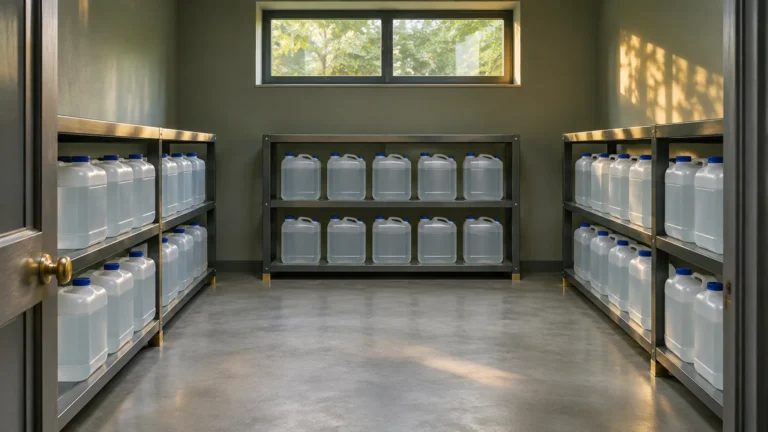
List sealed drinking-water containers, the number of people covered and the period covered under your chosen assumption. Note pets and any additional requirements discussed with a care professional. Keep a separate allowance for cleaning and toilet arrangements. Include a container you can actually carry; a full large vessel that no one can move may be less practical than several smaller ones.
Your checklist also needs source information: water utility alerts, local health guidance, a verified distribution location when announced and a way to distinguish drinking water from water reserved for other uses. Treatment supplies do not make every source safe. Chemical contamination requires a different response from a microbial advisory, and some situations require another source entirely.
Food: inventory meals, not just packages
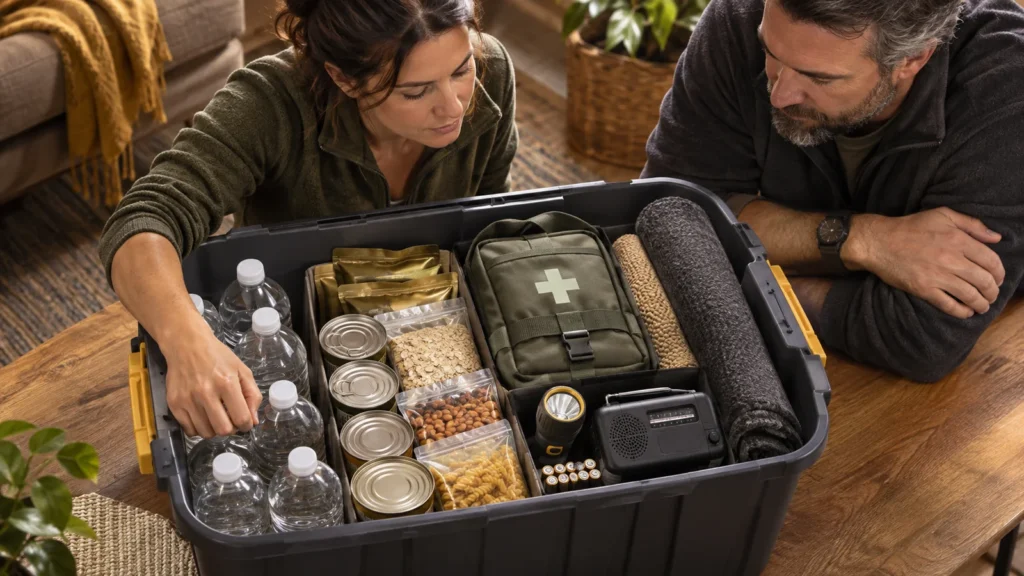
Count breakfasts, lunches, dinners and snacks that work without ordinary refrigeration. Record allergies, texture needs, manual opening tools, water required for preparation and any cooking requirement. Keep foods people already use so rotation is part of ordinary meals rather than a separate waste stream.
Include utensils, safe food-contact cleaning supplies and small containers suitable for a single meal. A large can may leave more leftovers than you can keep cold. Add appliance thermometers and an outage-time record for the food already in your refrigerator or freezer. Do not put taste-testing on the checklist; it is not a reliable safety test.
Light, information and limited electricity
List one accessible light for each necessary task area rather than promising to illuminate the entire home. Include stairs, an exit route, a caregiving location and a place to read instructions. Record battery types and charging cables. Test whether small controls can be operated by the people who will use them.
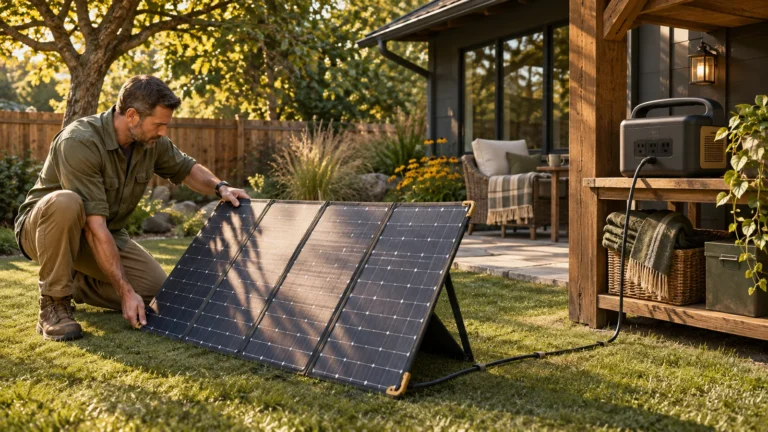
Add a battery-backed weather or broadcast receiver, printed local frequencies or station names and a paper emergency contact card. A phone charger belongs alongside the phone's actual cable and a verified power source. A cable with the right shape does not prove the source can power every device.
Medicines and personal care
Prepare a current medication and device list with storage requirements, refill arrangements and professional contact information. Ask the pharmacy or care team how disruptions should be handled. Do not substitute a general checklist for an individual care plan, change doses to stretch supplies or assume all refrigerated products tolerate the same conditions.
Include glasses, hearing-device supplies, mobility aids, menstrual products, diapers and other care items that apply. Consider a spare way to communicate a need. Secure medicines from unauthorized access while keeping an authorized caregiver able to find them. A locked container without a workable access plan creates its own problem.
Hygiene and sanitation
The list should name a handwashing method, soap, a clean water supply and a way to collect wastewater where needed. Add toilet paper and an approved temporary toilet arrangement appropriate to local instructions. Know whether a building, septic pump or public sewer restriction means the normal toilet should not be used.
Waste storage and disposal are separate checklist entries. Bags, a closed container and protective supplies are not a complete long-term disposal plan. Confirm what local sanitation officials will accept. Never make open dumping, flushing inappropriate materials or mixing cleaning chemicals a fallback procedure.
Home and seasonal safety
Check smoke and carbon-monoxide alarms, their backup power and their operating instructions. Keep exits clear and locate necessary shutoff information without turning this into a do-it-yourself utility repair project. Wet or damaged electrical equipment belongs to qualified assessment, not experimental testing.
List seasonal protection: clothing, blankets, shade arrangements and an accessible alternative place to stay. Do not assume blankets solve an unsafe winter home or a fan solves dangerous heat. Include a point at which the household moves to a safer environment. If a fuel-burning generator is part of the plan, its permitted outdoor location and safe connection method must already be verified.
Documents, money and transport
Keep protected copies of identification, insurance information, essential prescriptions, key contacts and important account-access instructions. Avoid placing passwords or complete financial credentials in an openly accessible binder. Store only what a helper genuinely needs to act.
A modest emergency cash reserve, familiar payment alternatives, vehicle keys, a paper map and a transport contact can matter more than another gadget. Include pets, mobility equipment and the carrying limits of each traveler in departure planning. Do not write “drive to family” without confirming who drives and where the family can receive you.
A compact checklist table
| Function | Evidence to record | Next check | | Water | Safe containers, quantity assumption, source fallback | Can each user access a manageable portion? | | Meals | Usable meal count and preparation requirements | Can one be prepared without normal services? | | Light | Working task lights and compatible power | Can you reach the exit after dark? | | Health | Individual professional plan and current contact | Is the backup arrangement actually available? | | Sanitation | Approved temporary method and disposal instructions | Who confirms when normal service is unusable? | | Information | Receiver, paper contacts and meeting arrangement | What happens if the phone has no signal? | | Departure | Destination, route, driver and essential bag | What condition triggers leaving? |
Build a checklist that records readiness, not ownership
Add five columns to the supply list: essential function, item or arrangement, location, verification and next review. An item earns a readiness check only when someone can find it, use it appropriately and explain its limitation. A sealed box of unfamiliar equipment belongs in the inventory, but it is not yet a verified capability.
For a flashlight, verification might mean correct batteries, working controls and safe access from the sleeping area. For drinking water, it includes suitable storage, a clean dispensing method and an honest quantity. For a medical need, the appropriate entry may be a provider-approved continuity arrangement rather than a piece of equipment.
Keep quantities in meaningful units. Record usable gallons instead of “several jugs,” meals that can actually be prepared instead of “lots of food,” and the supported charging source instead of “backup power.” Note uncertainties rather than filling them with optimistic estimates.
Check the overlooked accessories
A useful audit follows one task from beginning to end. To prepare a shelf-stable meal, can the intended person open the package, obtain safe water if required, serve it and clean up? To use a radio, can they find the intended batteries and tune the verified local source? To leave, can they reach the contact sheet and necessary care supplies without moving heavy bins?
These questions identify small gaps that bulk purchasing often misses. A manual opener, appropriate lighting or an accessible storage position may matter more than another case of the same food. Do not add accessories solely because a checklist on the internet includes them; connect each to a real task.
Review the list with all users, including someone who did not organize the supplies. Ask them to describe the next step without taking over immediately. Record unclear labels and inaccessible locations. Correct those issues under normal conditions, then keep the list short enough to use during stress. The best checklist makes a practical decision easier instead of proving that the household owns a large collection.
Turn missing items into priorities
Suppose a household owns several flashlights but has no way to obtain a medicine refill or carry water upstairs. Its next purchase should not automatically be another light. Rank gaps by the harm caused, time until failure, available workaround and cost of closing the gap. Record why one item comes before another.
Share the checklist with someone who did not write it. Ask them to find a light, identify the next safe meal and explain how to leave. Correct ambiguous locations and instructions. Leave intentional space for household-specific needs rather than claiming this list covers every disability, climate, dwelling or medical condition.
A useful checklist remains editable. It should become more accurate as you practice, not merely longer as you shop. Keep the inventory, practical test and decision to relocate connected, because none of them is sufficient alone.
Sources and safety references
Reviewed November 2026. Planning examples use stated assumptions; they are not product tests or survival guarantees. Follow current local instructions and qualified guidance for individual medical, building and utility decisions.