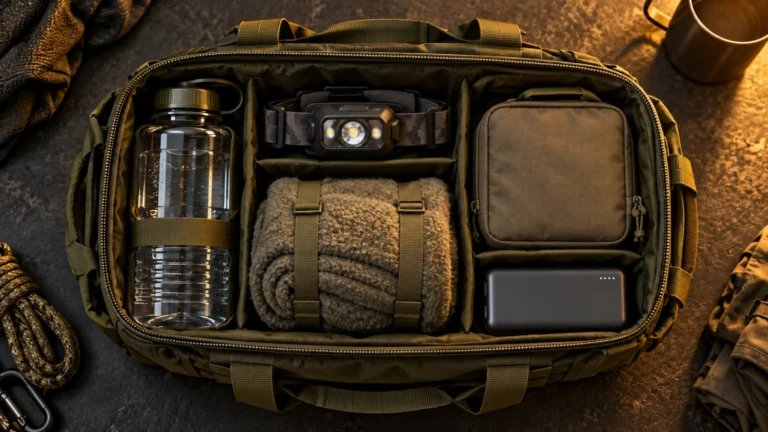

A useful emergency plan answers ordinary questions under difficult conditions: who needs help, where information comes from and how people reconnect. It should be brief enough to find and specific enough to act on. Begin with a household conversation rather than a shopping list. The goal is a shared process, not a promise that every disruption can be predicted.
Start with your real circumstances
Discuss likely local hazards and the practical needs of everyone involved. Work schedules, school arrangements, mobility, language, medication and pets can affect what a plan must address. Ask people what assistance they actually need instead of assigning needs based on age or appearance.
Ready Army organizes preparedness around being informed, making a plan, getting involved and building a kit. Use that broad framework to connect information, responsibilities and resources. Local emergency management instructions remain essential; a general household plan should not override an official evacuation or other urgent direction.
Decide how to communicate
Choose a primary contact approach and a fallback. Keep necessary contact information accessible if a phone is unavailable, but protect sensitive personal details. Discuss how an out-of-area contact could help relay status when local communication is disrupted. Verify the person's willingness rather than assigning the role without asking.
Keep messages concise and factual. Decide what a useful status update includes, such as whether someone is safe and the agreed next step. Avoid publicly sharing a complete household roster, private medical details or information that reveals an empty home.
Make the plan easy to locate
Create a short main sheet and keep detailed private information separately where appropriate. Use readable text and a format that household members can access. A document stored only in one person's locked phone may be unavailable when others need it.
Test the information-finding process in a calm practice conversation. Ask each participant to locate the contact sheet and explain their next step. Do not stage a frightening surprise or simulate dangerous conditions. A simple discussion can reveal missing numbers and conflicting assumptions without adding risk.
Turn review into maintenance
Assign a review responsibility and revisit the plan after a move, changed contact details or a practice session. Record a small number of concrete corrections rather than expanding the plan until no one reads it. Include a way to recognize the current version.
Key takeaway: preparation becomes useful when people understand the same simple process. Build around real household needs, current local information and practiced communication. Supplies support that process; they do not replace it or guarantee a particular outcome.
Sources & further reading
- Ready Army: Be Informed, Make a Plan, Get Involved, Build a Kit
- Ready.gov: Are You Ready? Citizen Preparedness Guide
Source review: October29,2026. Researched educational guidance, not firsthand testing, professional certification or an interview. Follow current local authorities, product instructions and qualified advice for individual safety or legal decisions.