Emergency water storage is a small supply system. It has a source, container, filling procedure, location, access method and replacement schedule. Neglecting any one of those can make a large inventory less useful than a modest amount that is well managed.
For a prolonged outage, distinguish the water you can safely store now from water you expect to obtain later. Do not fill every available container and assume the work is finished. A ninety-day plan may require both stored drinking water and a verified way to renew it—or an earlier move when safe water cannot be maintained.
Choose an appropriate drinking-water source
Unopened commercially bottled water is CDC's preferred dependable emergency option. Follow its storage and date instructions. Water from an uncertain source requires a separate safety decision; a clean-looking container cannot establish that the water inside is suitable to drink.
If you fill your own containers, use a suitable safe source and follow current public-health container-cleaning and sanitizing guidance. Do not fill from a source under a do-not-drink or do-not-use advisory merely because you intend to store the water for later. Those advisories can involve contaminants that household treatment will not remove.
Select food-grade containers
Use containers intended for food or drinking-water storage with closures that protect their contents. Never reuse a vessel that held fuel, pesticides or toxic chemicals. A familiar shape or a strong plastic wall does not make a container appropriate for drinking water.
Consider the opening, handle and dispensing method. Can the intended user open it? Can water be poured without touching the inside of the cap or dipping hands into the supply? A purpose-made spigot can help, but it also needs cleaning and maintenance according to its instructions. Do not assume a tank stays sanitary indefinitely because its lid remains shut.
Plan the filling process before starting
Work in a clean area with the correct containers, caps and instructions available. Inspect for damage, residues and incompatible components. Follow CDC's storage-container sanitizing directions and any container-specific requirements, including contact time and draining, instead of inventing a stronger solution.
Keep container sanitizing separate from drinking-water disinfection. They are different tasks with different quantities and instructions. Do not transfer a cleaning concentration into a drinking-water recipe. Label the task on your checklist so another person does not confuse the two during a rushed handoff.
Record what is inside
Use a durable record showing the source, filling date, intended use and replacement or review date. If a container holds water reserved for non-drinking use, make that distinction unmistakable to the household. Avoid relying only on color, because people may interpret it differently or have difficulty distinguishing it.
Keep a separate inventory that totals usable volume by location. Record actual contents, not just the size stamped on a container. A damaged or questionable batch should be removed from the ready-to-drink total until its status is resolved. Do not count the same container in both the departure kit and the household reserve unless you acknowledge that moving it changes the other total.
Store for access and protection
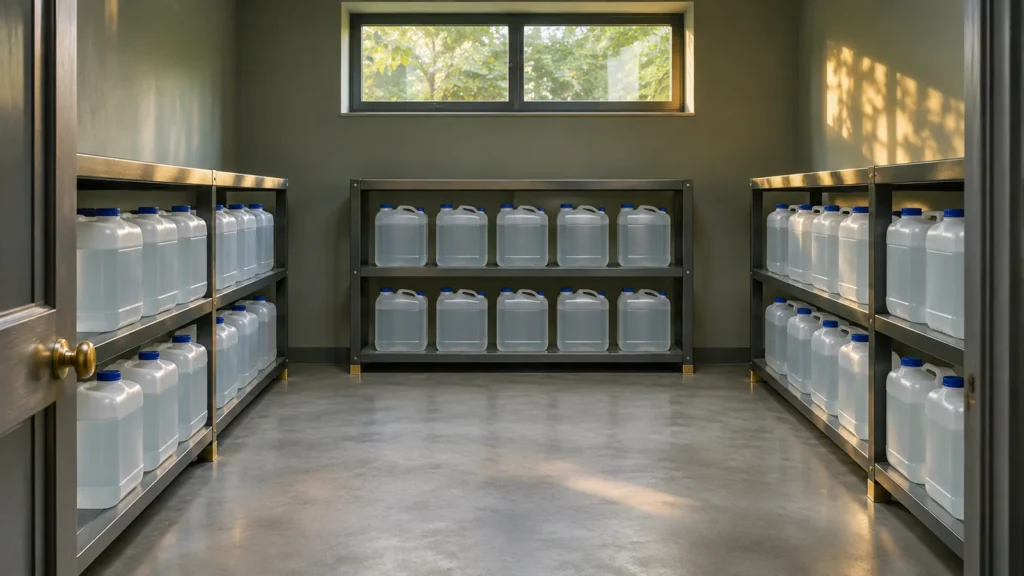
Choose a cool, protected location away from direct sunlight and chemicals. Keep closures clean and containers protected from damage. Follow the container's temperature and stacking restrictions. Do not store drinking water where leaking fuel or cleaners could contaminate it.
Distribute weight and preserve clear exits. Large water stores may require qualified structural advice, particularly on raised floors or platforms. A container that can only be reached by unstable climbing is not a good emergency arrangement. Include people with different lifting abilities in the placement decision rather than assuming everyone can move the largest vessel.
Replace and inspect on a documented cycle
CDC advises replacing self-filled stored water every six months. For commercially bottled water, observe the product's expiration or storage instructions. A calendar reminder is useful only if someone also checks the condition of containers, closures and the storage environment.
Review after a leak, flood, chemical spill, overheating event or a move. Do not assume a normal replacement date covers an abnormal exposure. If safety is uncertain, use an appropriate confirmed source while obtaining guidance. The purpose of rotation is dependable water, not preserving a questionable batch because discarding it feels wasteful.
Plan opening and dispensing
Choose a method that avoids introducing hands, used utensils or dirty surfaces into the supply. Keep caps and contact surfaces clean. Follow the container and public-health instructions for handling water after opening; the condition of an opened container is not identical to a sealed one.
For a household with multiple users, establish where the active container sits and where replacements are kept. A simple routine can reduce unnecessary openings and confusion. If someone cannot safely pour a full container, provide a manageable alternative rather than requiring them to wait for assistance whenever they need water.
Example: a storage plan that fits the household
A household initially buys two very large containers for an upper-floor cupboard. On review, one member cannot lift them and the load is concentrated in a location whose capacity has not been checked. The plan looks substantial on paper but is difficult to use safely.
They change to several appropriate smaller containers in a verified suitable location, label the contents and record a replacement cycle. They retain an accessible portion for departure and identify a transport arrangement for replenishment. This hypothetical example does not prescribe a container size; it illustrates why accessibility and storage conditions belong in the calculation.
Keep collection systems in a separate category
Rain barrels, swimming pools, hot tubs and other stored water are not automatically drinking-water supplies. Their construction, chemicals, debris and microbial risks vary. Do not promote an improvised collection system as safe simply because water can pass through a filter.
Discuss any proposed source with the relevant local health or water authority. Household treatment has limits, especially for chemical contamination. A prudent plan can designate suitable water for a particular non-drinking use while protecting the separate potable supply, but it should never blur those categories to make the inventory appear larger.
Match container size to the user
A large container can reduce the number of lids and storage positions, but it can also become impossible for an intended user to lift or dispense safely. Compare a suitable smaller dispensing supply with bulk storage supported by an appropriate transfer method. Avoid makeshift siphoning or mouth contact.
Test access using an empty container or another safe method before filling and moving heavy loads. Check the shelf and floor support, route width and reach. A container stored behind unrelated equipment may be technically present but unavailable during an urgent departure.
Keep cleaning and filling instructions with the storage plan. Follow CDC and container guidance rather than assuming any household cleaning mixture is appropriate. Never repurpose a container with a hazardous chemical history for drinking water.
Build a rotation record that survives a phone failure
A paper log can record container identifier, source, fill date, review date, condition and intended use. Use labels that remain readable under ordinary storage conditions. Do not mark uncertain water simply “safe” without the source and handling information needed to justify that conclusion.
Inspect for leaks, damaged closures, unusual storage conditions and contamination risk. If a container's status is uncertain, separate it from confirmed drinking supplies and obtain appropriate guidance. Do not mix uncertain water into a larger reserve to avoid acknowledging a loss.
For self-filled storage, follow CDC's replacement guidance and adjust sooner when condition or local instructions require it. Unopened commercially bottled water follows its relevant storage and package guidance. These are different arrangements, not interchangeable assumptions.
Practice one dispensing task with all intended users under safe normal conditions. Ask whether the lid, spout and location work for them. Record the improvement before adding quantity. A modest clean, accessible reserve with a credible continuation plan is more useful than an inaccessible stack whose handling has never been tested.
Storage inspection checklist
– Source suitable for the intended use and current advisory status. – Food-grade container with known prior use and intact closure. – Cleaning and sanitizing instructions followed for the correct task. – Source, date, volume and intended use recorded. – Protected location, manageable handling and clear access. – Replacement reminders and abnormal-exposure checks assigned. – Clean dispensing method available. – Replenishment or relocation arrangement identified before depletion.
Long-term storage works when the process is repeatable by someone besides its designer. Walk another household member through the system, including what should be excluded from drinking use. Resolve ambiguity now rather than expecting a label or a confident assumption to protect people later.
Sources and safety references
Reviewed November 2026. Planning examples use stated assumptions; they are not product tests or survival guarantees. Follow current local instructions and qualified guidance for individual medical, building and utility decisions.