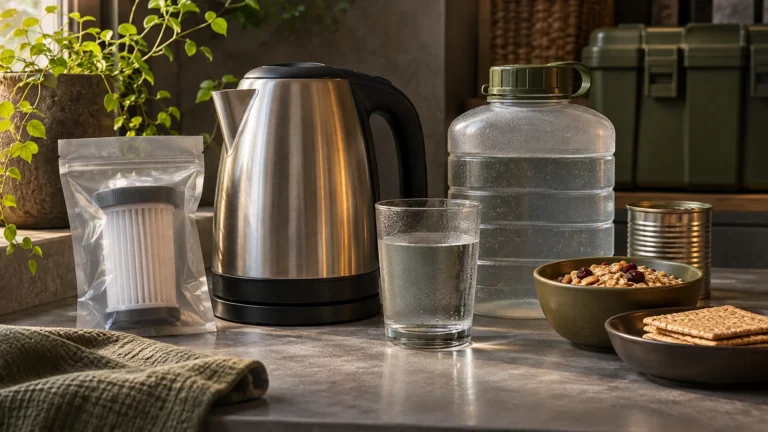

A ninety-day supply plan becomes useful only when the household knows what remains, what is usable and what must happen next. Food, water, batteries and fuel have different units, storage constraints and safety rules. Combining them into one vague “days of supplies” estimate can hide the first dependency likely to fail.
Build a simple management system that supports decisions without consuming every waking hour. The goal is adequate care and safe resupply or relocation, not reducing consumption below people's needs to make an inventory last longer.
Use a separate unit for each resource
Record water in a consistent volume unit, food by packages and usable servings, electrical energy in watt-hours when appropriate and fuel in the unit specified by the equipment and storage plan. Write the unit beside every number.
A package count is not a nutrition assessment, and a battery percentage is not a universal energy measurement. Note assumptions and limitations. Where actual measurement is unavailable, use a clearly labeled estimate and review it against observations.
Keep the location and condition of supplies with the quantity. Ten containers are not ten usable containers if some are damaged, inaccessible or unsuitable for the intended use. Separate uncertain stock from confirmed usable reserves.
Calculate coverage without implying a guarantee
For a simplified example, a household has forty-eight gallons of usable water and a planned combined use of six gallons per day. The arithmetic gives eight days of coverage at that assumed rate. It does not establish that six gallons meets everyone's actual needs or that conditions will remain the same.
Recalculate when people, weather, illness, preparation methods or hygiene needs change. Add an action threshold that leaves time for verified replenishment or relocation. Waiting until the calculated coverage reaches zero removes useful options.
Apply the same reasoning to other resources, but do not substitute one for another. Extra batteries cannot compensate for failed sanitation, and stored fuel is not safe drinking water. The weakest essential service may determine the next action.
Manage food as meals, not a pile of packages
Create a short menu using foods the household can safely prepare and tolerate. Include water, energy, utensils, cleanup and dietary requirements. Count what is actually available after unsafe or damaged food is excluded.
Record opening dates and follow package instructions. Without dependable refrigeration, do not assume leftovers can be kept safely. Choose package sizes and meal arrangements that reduce waste without withholding needed food.
Rotate ordinary foods where appropriate, but do not treat “first in, first out” as permission to use a swollen, leaking or otherwise unsafe container. Check authoritative food guidance and the product instructions when condition is uncertain.
Keep drinking-water handling clean
Use an appropriate dispensing process and avoid contaminating openings. Maintain clear labels for source, date and intended use. Do not refill drinking containers from an uncertain supply without following the applicable advisory and treatment guidance.
A water-treatment step may change microbial risk without removing chemicals. Keep the source question separate from the quantity question. Large volumes of unsafe water do not solve a drinking-water shortage.
Review handling with all intended users. If a heavy container requires unsafe lifting, provide a suitable accessible arrangement rather than accepting repeated spills or contaminated transfer. Record losses honestly so the inventory remains meaningful.
Track battery energy and charging opportunity
For powered equipment, list the device, intended use, measured or documented demand where available, supported charging method and observed charging interval. Use watt-hours for an energy budget when the necessary values are known.
A hypothetical lamp using four watts for five hours requires twenty watt-hours before any additional system losses. That is an arithmetic example, not a product runtime claim. Actual operation depends on mode, temperature, battery condition and the supported power system.
Protect spare cells and packs from short circuits, damage and unsuitable temperatures. Use intended chargers. Do not open or repair a damaged pack, and follow the relevant disposal guidance. A failed battery should not remain mixed with usable stock.
Treat fuel as a regulated hazardous resource
Consumption estimates can help identify whether a plan is practical, but they do not authorize storage. Fuel type, local fire rules, property restrictions, containers, ventilation and equipment instructions determine what is permitted and safe.
Do not bring outdoor fuel into living areas or store it near food, drinking water or ignition sources. Refueling and equipment operation must follow the manufacturer and fire-safety instructions. Never refuel a running or hot generator.
If a proposed ninety-day plan requires unsafe quantities, change the plan. Reduce optional loads, seek supported alternatives or relocate. A lower-risk service arrangement can be more resilient than a larger fuel stockpile.
Set review and action thresholds
Choose a manageable routine for checking essential resources and a trigger for earlier review. A leak, damaged package, medication change, new household member or failed charging source should not wait for the next calendar reminder.
For each resource, record the next action: verify a supplier, contact a service, change a meal plan or arrange movement. Assign an owner and a realistic deadline. Avoid a spreadsheet that tracks shortages without producing decisions.
Keep emergency services for urgent needs rather than routine inventory questions. Use the appropriate utility, health department, supplier or community information service for nonemergency guidance.
Example: the optimistic inventory
A family lists twelve days of food because it has twelve bags of meal ingredients. Their review reveals that several meals require long cooking times, more safe water than expected and leftovers they cannot refrigerate.
They replace the abstract count with a realistic menu and preparation plan. Some ingredients remain useful later; others are not counted as ready meals. The change reduces false confidence without wasting food.
They also choose a resupply or relocation threshold based on the shortest essential dependency. A revised estimate is valuable when it changes an action, even if the number becomes less impressive.
Share the system without overcomplicating it
A paper table can be sufficient: resource, unit, usable amount, assumed daily need, review date and next action. Keep private medical and financial information separate. Another authorized adult should be able to understand the record without special software.
Do not create a ritual that requires weighing every item or checking every battery repeatedly. Measure what supports a decision. Protect rest and allow caregivers to use a simpler process when demands increase.
Create an exception column
Alongside each resource quantity, record what could invalidate the estimate: a leak, contamination, damaged packaging, changed medication needs, unavailable charging or an interrupted disposal service. A calculated coverage period is only as useful as its assumptions.
Review exceptions when they occur rather than waiting for the next inventory date. If a water source becomes uncertain, do not continue counting it as confirmed drinking water. If a battery is damaged, remove it from the usable reserve and follow appropriate handling guidance.
Keep losses visible without assigning blame. A clear record supports a better decision; hiding a spill or broken item to preserve an impressive total creates false confidence.
Compare resupply with the cost of staying
A replenishment trip uses time, transport, energy and sometimes money. Confirm the destination, availability and safe route before committing those resources. A rumored distribution event is not a dependable supply source.
Consider whether the trip solves the real problem. Bringing more food home may not help if the household has lost safe sanitation or necessary care. Relocation can address several dependencies at once when a suitable destination is available.
Use the shortest essential dependency to guide timing, while preserving individual needs. Do not cut necessary water or treatment merely to align all resources with the same target day. Different resources can have different review and action thresholds.
Ask another adult to explain the inventory result and next action. If the system requires specialized software knowledge or the organizer's memory, simplify it. A modest table with honest assumptions and a timely decision is more resilient than a detailed forecast that no one else can interpret when circumstances change.
Management checklist
Verify usable quantities and units, state assumptions, account for preparation needs, protect storage, assign an action threshold and maintain an alternate destination. Supply management succeeds when it supports adequate living conditions and timely decisions, not when a spreadsheet claims the household can last longer than its safe capabilities.
Sources and safety references
- CDC: Create and Store an Emergency Water Supply
- FDA: Food and Water Safety During Power Outages and Floods
- U.S. Fire Administration: Severe Weather Fire Safety
Reviewed November 2026. Planning examples use stated assumptions; they are not product tests or survival guarantees. Follow current local instructions and qualified guidance for individual medical, building and utility decisions.