
Heat preparedness is often mistaken for a list of cooling tricks. During an extended outage, the central question is more serious: can the people in this household remain safely cool, and if not, where will they go? Shade, lighter activity and drinking water can support a plan, but they do not replace dependable cooling when conditions become dangerous.
This guide focuses on planning and early action rather than testing endurance. Medical conditions, age, medications, humidity, activity and housing affect risk. No single indoor temperature or fan setting guarantees safety for everyone.
Identify heat dependencies before the outage
Ask who normally relies on air conditioning, electrically powered medical equipment, refrigerated medicine, home care or transportation assistance. Discuss individual precautions with a clinician or pharmacist, especially when fluid limits or medication effects complicate ordinary advice. Do not change medicine or fluid restrictions based on a general article.
Review the building as well. A top-floor apartment, a room with afternoon sun and a house with limited cross-ventilation may behave differently. Security, smoke, outdoor air quality and accessibility can limit the use of open windows. Do not prescribe ventilation that creates another hazard.
Write down the household's cooling destination, route, transport provider and backup contact. A plan that says “go somewhere cool” remains unfinished until someone confirms access, operating hours and the needs of people traveling with you.
Choose dependable cooling over improvised endurance
Locate community cooling centers and other suitable cooled facilities through local emergency management or community services. Availability can change during a widespread outage, so confirm current information. Ask about accessible entrances, mobility equipment, caregivers, transportation and pets before those details become urgent.
If safe and available, staying with a trusted person outside the affected area may be more sustainable than repeatedly returning to an overheated home. Confirm consent and arrangements instead of treating a friend's address as an unlimited shelter commitment.
Leave early enough to travel safely. Waiting for someone to become confused, faint or unable to move turns a planned relocation into an emergency. An official evacuation order or urgent health concern overrides the desire to protect household supplies.
Understand the limits of fans
A fan moves air; it does not provide refrigerated cooling. Do not treat a battery fan as an adequate substitute for air conditioning in dangerous heat. Follow current public-health advice for the actual conditions and the people involved.
A fan's useful operating time is also a power-budget question. Record the device's actual or measured consumption when possible, then evaluate charging capacity. Do not exhaust communication or medically necessary backup power on the assumption that air movement alone makes the room safe.
In a planning exercise, compare two options: a few hours of portable airflow in the home versus confirmed transportation to a dependable cooled location. The second may solve more of the household's real risk even though the first is easier to buy.
Reduce avoidable heat while arranging a safe destination
Where appropriate, shade sun-exposed windows and avoid unnecessary heat-producing tasks. Use safe window coverings that do not block required exits or ventilation. Schedule essential exertion for safer conditions when feasible, and share demanding tasks rather than exhausting one person.
Wear comfortable clothing suited to the conditions. Use safe water and public-health cooling guidance. Never use contaminated floodwater for cooling or bathing. Do not create an electrocution hazard by combining water with powered equipment.
Keep drinking water accessible, but distinguish general hydration from individualized medical instructions. People with prescribed fluid limits need clinician guidance. Watch children, older adults and people who may have difficulty obtaining drinks or communicating discomfort. Do not wait for someone to ask repeatedly for help.
Recognize a change that requires urgent help
Heat illness can progress quickly. Confusion, collapse, loss of consciousness or other signs of heat stroke require emergency services and immediate cooling according to dispatcher or public-health guidance. Do not wait for a home thermometer to confirm a diagnosis, and do not give drinks to someone who is unconscious or unable to swallow safely.
Move away from the heat if it can be done safely. Stay with the affected person and follow emergency instructions. A person who seems seriously ill needs care, not a longer rest break in the same hot room.
For less severe symptoms, stop activity, move to a cooler place and seek medical advice as appropriate. When symptoms worsen or do not improve, get help. This article is not a diagnostic checklist and cannot distinguish every medical emergency from heat exposure.
Plan check-ins that lead to action
A meaningful check-in asks about conditions and next steps rather than merely recording that someone answered a phone. Agree on what to do if the person cannot be reached, wants help relocating or has lost transportation.
Ask permission before sharing someone's address, health needs or contact details with a neighborhood group. Store only the information needed to provide agreed assistance. Do not publish a list of vulnerable residents.
A check-in should not require an untrained neighbor to provide medical treatment or enter an unsafe building. Define the boundary between ordinary assistance and calling emergency services. Choose backup contacts so one unavailable volunteer does not break the arrangement.
Example: the upstairs apartment
A household plans to remain in an upstairs apartment using two small fans. During a normal-weather review, they realize an older relative cannot easily descend the stairs and the nearest cooled facility requires transport. Buying another fan would not solve either problem.
They contact building management about safe assistance procedures, arrange a trusted driver and confirm an accessible destination. A packed essentials bag includes medication information, mobility needs and contact numbers. Their decision point is early relocation when cooling is lost during dangerous heat, not waiting for severe symptoms.
The lesson is about dependencies. The most valuable preparation may be a confirmed arrangement rather than additional equipment.
Pets, vehicles and daily routines
Include animals in relocation planning with the veterinarian's advice where needed. Confirm which destinations accept pets and what carriers or supplies are required. Never leave a person or animal in a parked vehicle as an alternative to safe shelter.
A vehicle is not an indoor generator or a reason to idle in a garage. Do not run an engine in an enclosed or partly enclosed area. Any transportation-based cooling arrangement must also account for exhaust, fuel, the driver's condition and safe travel.
Reduce unnecessary trips and time in unsafe heat. Use trusted current information to decide when facilities are open. Make one coordinated trip with essential items rather than repeated errands that exhaust people and transportation resources.
A practical heat-planning exercise
List every person and animal, the assistance they need and a confirmed cooled destination. Test the contact numbers under normal conditions. Ask the driver to describe the pickup and backup route. Check whether essential equipment and supplies fit safely in the vehicle.
Then introduce one scenario: the first destination closes. Write the alternate destination and who will confirm it. If the plan has no realistic answer, close that gap before purchasing more accessories.
Make a cooling destination card
Record the facility or trusted host, current contact method, access arrangements, transportation and the items the household needs to bring. Include a backup destination and who will verify it. Keep the card offline as well as in any electronic plan.
Do not assume that a facility's ordinary opening hours continue during a widespread outage. Confirm current availability through responsible local information sources. Ask specifically about mobility equipment, caregivers and pets rather than discovering a mismatch after arrival.
For someone with individual medical precautions, place the relevant professional contact on a private attachment. A general household card should not publicly display diagnoses or medication lists. Share only what is necessary for agreed assistance.
Reduce the work required to leave
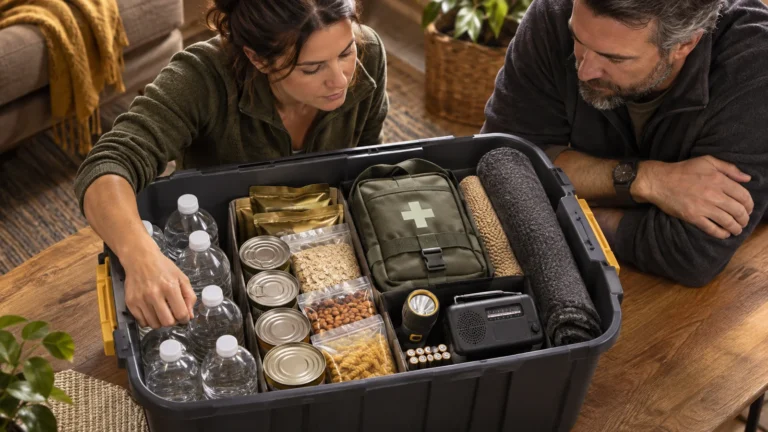
Pack essential items in a manageable arrangement and keep the route clear. Avoid a plan that requires moving heavy bins while someone is already unwell. The departure list should distinguish necessary care and documents from optional comforts.
Practice the transport handoff under normal safe conditions. Confirm who assists, where the vehicle stops and what happens if the primary driver is unavailable. Do not conduct a heat-exposure test to determine how long the household can tolerate the home.
After the practice, ask the intended passengers what made movement difficult. An inaccessible step, missing carrier or unclear contact may be the most important gap. Correct it before spending on more cooling accessories.
Keep monitoring current conditions and act early when dependable cooling is unavailable. A destination card is not a guarantee of service, but it turns a vague intention into a set of questions that can be verified. The plan succeeds when people reach safer conditions with enough time and support, not when they remain at home for a predetermined number of hours.
Completion checklist
– Identify individual heat-related support needs with appropriate professionals. – Confirm a reliable cooling destination and transport. – Plan accessible check-ins and pet arrangements. – Do not depend on fans as protection from dangerous heat. – Know how to request urgent help and follow cooling instructions. – Move early when safe cooling cannot be maintained.
Surviving a heat-related outage should mean reaching safer conditions, not proving that a household can tolerate an increasingly hot room. A strong plan makes cooling and transport available before symptoms force the decision.
Sources and safety references
Reviewed November 2026. Planning examples use stated assumptions; they are not product tests or survival guarantees. Follow current local instructions and qualified guidance for individual medical, building and utility decisions.