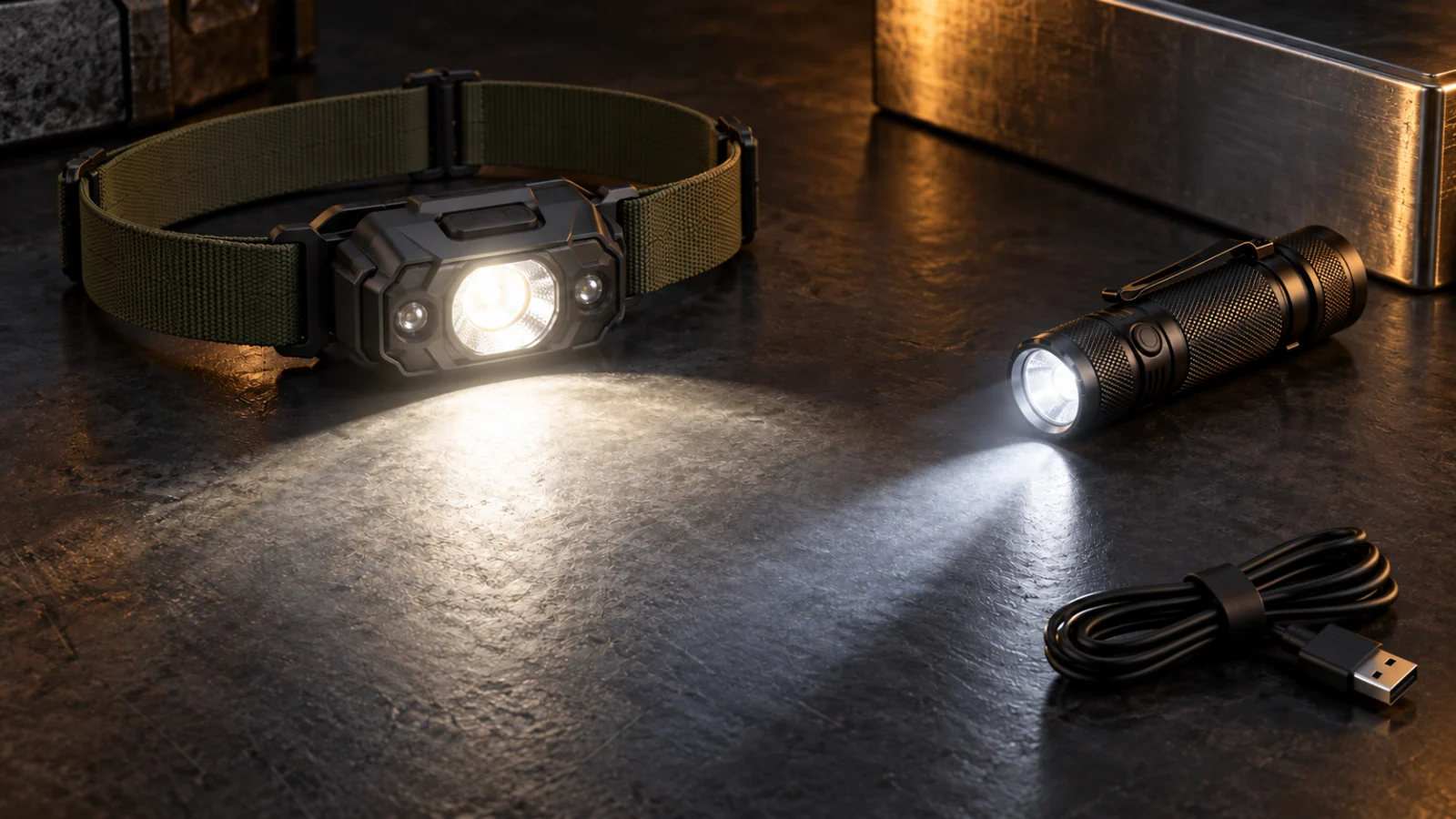
A light is useful when it helps someone see the task in front of them and remains usable for the expected conditions. A single brightness figure cannot answer questions about beam shape, runtime, controls or charging. Begin with the job rather than the largest number on a product page. This is a research-based selection framework, not a hands-on comparison or an endorsement of a particular model.
Describe what you need to illuminate
Reading a household instruction sheet, walking an established path and inspecting a distant object place different demands on a beam. Consider whether hands-free use matters and whether glare could make nearby work less comfortable. More advertised output does not automatically mean the most useful pattern for every task.
Petzl's technical explanations distinguish brightness, beam shape and lighting modes. Use manufacturer documentation to understand what a claimed figure describes. Compare the intended mode and conditions rather than pairing one model's maximum output with another's longest advertised runtime.
Inspect the controls and dependencies
Ask whether you can identify the necessary control without a long sequence of unfamiliar presses. Check instructions for locking out accidental activation and for any mode behavior relevant to storage. Do not assume that a control demonstrated in an advertisement will be easy for every user to operate.
Review the actual battery or charging requirements. Confirm connector compatibility and the availability of appropriate power during the scenario being planned. Follow battery safety and storage instructions; an improvised charging arrangement is not a substitute for a supported one.
Evaluate the whole kit
A backup light may be useful only if its power source is also maintained and accessible. Keep the system manageable rather than accumulating devices with incompatible requirements. Consider weight, storage conditions and who will be responsible for checking it.
Record unanswered questions before purchasing. Does the manufacturer define the performance claim? Are the relevant instructions available? Can the intended user operate the device comfortably? Those questions may be more useful than an unsourced ranking of the brightest products.
Test ordinary use safely
After purchase, familiarize yourself with the device in a safe setting and inspect the result for the intended task. Do not shine intense light into eyes or create a hazardous night exercise to prove a product's capability. A simple usability check should remain within the instructions.
Key takeaway: choose lighting as a system of beam, controls, power and maintenance. Published specifications provide starting evidence, not proof of field performance. Big Dog Tactical has not measured output, runtime or durability for a product through this guide.
Sources & further reading
Source review: October29,2026. Researched educational guidance, not firsthand testing, professional certification or an interview. Follow current local authorities, product instructions and qualified advice for individual safety or legal decisions.