A storage plan should prevent unauthorized access while remaining understandable to the adults responsible for it. That is a household safety task, not a contest over equipment size or tactical appearance. Begin with the people who live in or visit the home, then assess the device, its installation and the routines surrounding it. This guide provides a planning framework, not firearm-handling instruction or a statement of local law.
Identify who could gain access
Consider children, visitors, caregivers and anyone whose access has not been authorized. Think about spare keys, shared combinations and a device left open during another task. A lock provides less protection when its access method is routinely exposed. Keep sensitive access details out of a publicly shared checklist.
Discuss responsibilities with the relevant adults without assuming everyone has the same familiarity with firearms. Decide who maintains the storage system and how an observed problem is reported. A guest should not have to discover an unsafe condition before the household has considered it.
Evaluate the complete storage arrangement
ATF guidance emphasizes secure storage and restricting children's access, along with keeping ammunition secured separately. Follow the firearm and storage-device manufacturers' instructions and applicable federal, state and local requirements. A product photograph or a generic list cannot establish that a particular setup is suitable.
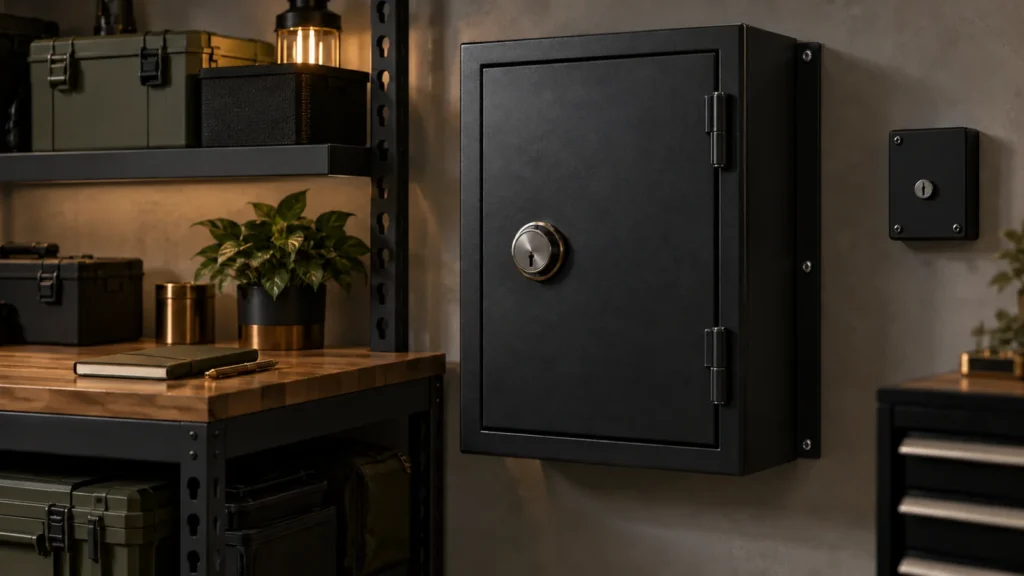
Check where the device will be installed, whether its installation instructions are being followed and who can access its release method. Ask the manufacturer about compatibility rather than improvising a modification. Do not test a storage idea through unsafe handling or ask an inexperienced person to operate a firearm to prove a point.
Make the routine sustainable
Write a short private maintenance reminder: inspect the device as directed, review authorized access and revisit the plan when household circumstances change. New visitors, a move or a changed caregiving arrangement may reveal assumptions that no longer hold.
Avoid storing combinations in an obvious shared note or posting detailed storage photographs online. A useful household record explains responsibility and review dates without broadcasting a map of valuables and access methods. Keep any necessary documentation in an appropriately protected location.
Know when to seek qualified help
If there is uncertainty about safe handling, compatibility or a legal requirement, pause and consult the appropriate qualified professional or authoritative source. An article cannot inspect your equipment or assess an individual crisis. For an immediate threat, use local emergency services rather than a website comment or message.
Key takeaway: secure storage depends on access control, installation and repeatable adult responsibility. Treat the plan as a living safety practice, and never interpret a locked device as a replacement for safe handling and appropriate instruction.
Sources & further reading
Source review: October29,2026. Researched educational guidance, not firsthand testing, professional certification or an interview. Follow current local authorities, product instructions and qualified advice for individual safety or legal decisions.