A crowded bag can still fail to meet the needs of the person carrying it. Review an emergency kit by the functions it must support, the conditions it may face and whether its contents can actually be used. This is a planning method, not a universal packing prescription. Household sheltering, a vehicle delay and a backcountry outing require different decisions.
Define the situation before the contents
Write down where the kit will be kept, who may use it and the kinds of disruption being considered. Weight, access, climate and specific health needs can change the priorities. Ask whether the kit is intended to stay in one place or move with someone who has limited carrying capacity.
Use authoritative local preparedness guidance for the relevant hazard. The National Park Service's Ten Essentials is an outdoor planning framework, not a complete household disaster list. Ready Army's approach similarly connects a kit to a broader plan. Do not combine unrelated lists and assume that a longer inventory is automatically safer.
Check usefulness and condition
Inspect packaging, expiration information and manufacturer instructions where applicable. Confirm that required batteries, connectors or other dependencies are present and compatible. An unfamiliar item that cannot be used appropriately is an unresolved training question, not a completed capability.
Separate a safe familiarization check from emergency improvisation. For medical needs, consult an appropriate clinician or pharmacist about suitable planning and storage. Do not change prescribed treatment, divide medication casually or rely on a magazine checklist as medical advice.
Organize for the person using it
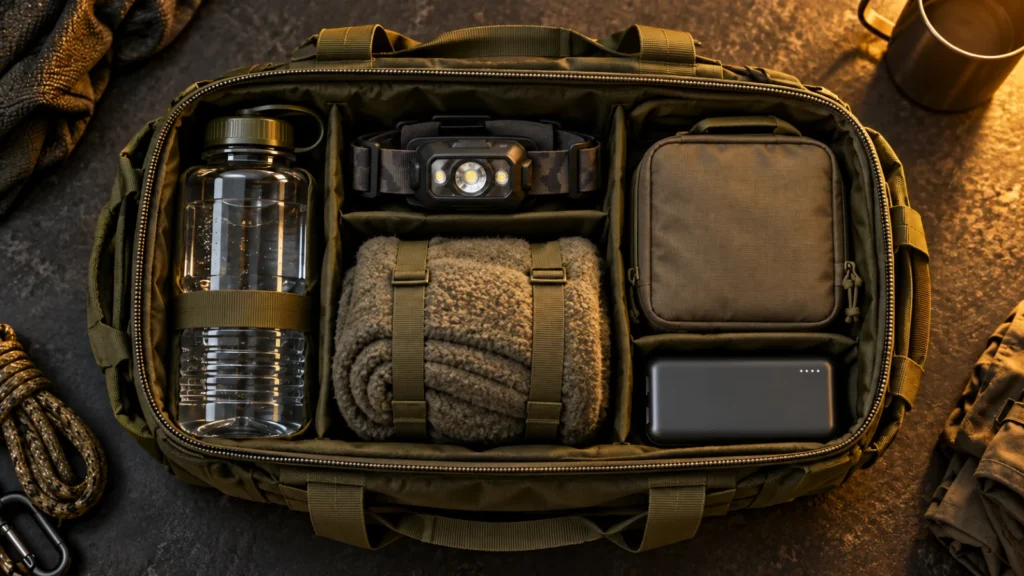
Group related items and make important instructions readable. Consider dexterity, vision, language and access needs with the actual user. A difficult closure or an unreadable label may matter more than a product's advertised durability.
Keep copies of necessary documents protected and limited to what is useful. Avoid carrying an unnecessary collection of sensitive records because a generic list suggested taking everything. Decide what must be available and what can remain in a secure backup location.
Review rather than endlessly expand
Use a simple record of the last check, missing items and unresolved dependencies. Replace or repair verified problems without turning every review into a purchase. When the purpose changes, reassess the contents rather than attaching another pouch indefinitely.
Key takeaway: a functional kit has a defined user, a defined purpose and maintained contents. It supports a realistic plan and appropriate skills. No inventory or product endorsement can guarantee safety across every emergency.
Sources & further reading
- Ready Army: Be Informed, Make a Plan, Get Involved, Build a Kit
- National Park Service: Ten Essentials
Source review: October29,2026. Researched educational guidance, not firsthand testing, professional certification or an interview. Follow current local authorities, product instructions and qualified advice for individual safety or legal decisions.